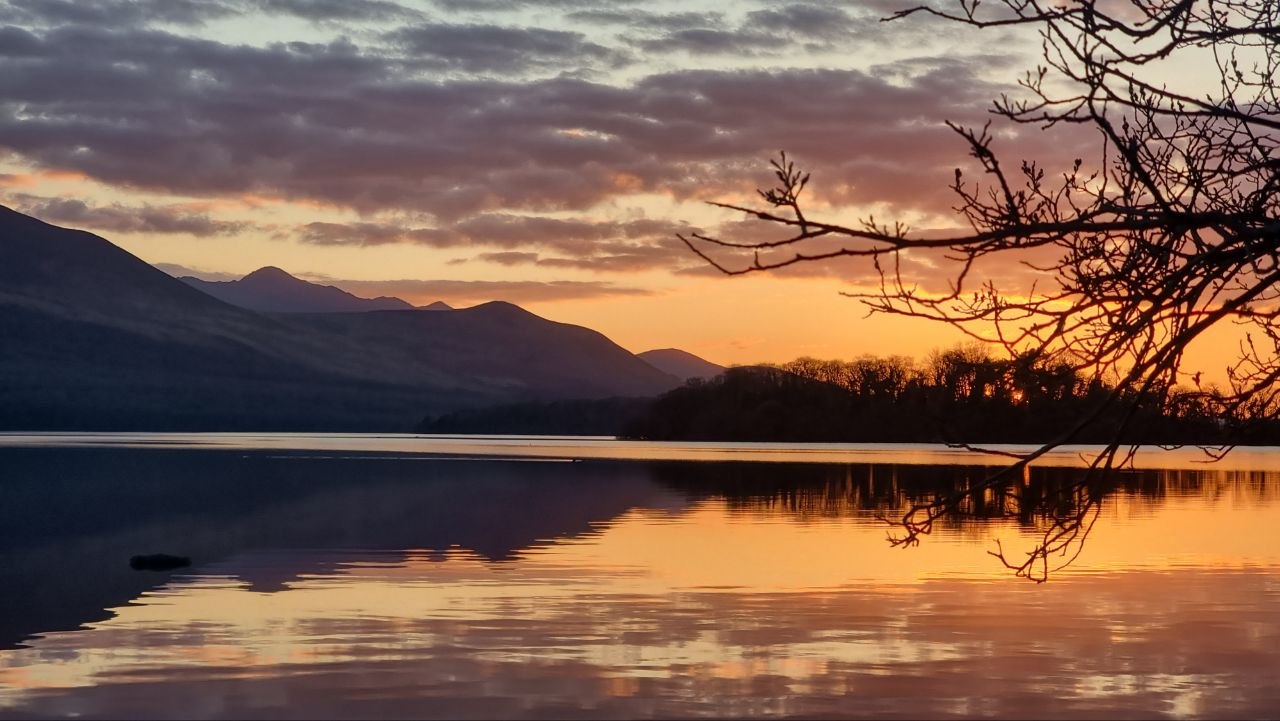
The three lakes of Killarney are not just a backdrop — they are the defining feature of the landscape, the reason the National Park exists, and the geographical heart around which everything else orbits. Carved by glacial action over thousands of years, they sit in a natural bowl formed by the MacGillycuddy's Reeks to the west and the lower hills to the east, connected by rivers and channels that make up one of the richest freshwater ecosystems in Ireland.
Lough Leane
The largest of the three — over 4,000 acres. The most visible from Killarney town, with Ross Castle on its western shore and Innisfallen Island at its centre.
Muckross Lake
The middle lake — quieter and more enclosed, surrounded by ancient woodland. Muckross House sits on its northern shore overlooking the mountains.
Upper Lake
The most remote and arguably the most beautiful — surrounded on three sides by mountains, accessible by boat or via the Old Kenmare Road on foot.
Lough Leane
Lough Leane is the largest of the three lakes at over 4,000 acres and the most accessible from Killarney town. Its name comes from the Irish Loch Léin — the Lake of Learning — a reference to the monastic settlement on Innisfallen Island at its centre, where monks wrote and preserved knowledge for centuries. Ross Castle stands on the western shore, one of the last strongholds of the Gaelic lords of Kerry. The lake is shallow in places and rich in brown trout — it has been fished since prehistoric times.
The Lake of Learning — named for the island monastery where Irish monks preserved knowledge through the dark ages.
Muckross Lake
Muckross Lake lies immediately south of Lough Leane, connected by a narrow channel at Brickeen Bridge. It is smaller and more enclosed than Lough Leane, hemmed in by the ancient yew and oak woodland of the National Park. Muckross House sits on the northern shore, and the Meeting of the Waters — where Lough Leane drains into Muckross Lake — is one of the most photographed spots in Kerry. The unique Reenadinna Yew Wood grows on a limestone peninsula jutting into the lake's eastern shore.
The Upper Lake
The Upper Lake is the most remote of the three and widely considered the most beautiful. It sits at a slightly higher elevation, surrounded on three sides by mountains — the Reeks to the west, Torc Mountain to the north, and the long ridge above the Black Valley to the south. It is accessible by boat from Ross Castle, on foot via the Old Kenmare Road, or by road to Lord Brandon's Cottage at its southern end. Eagles nest in the crags above the lake and the silence, away from the main tourist routes, is extraordinary.
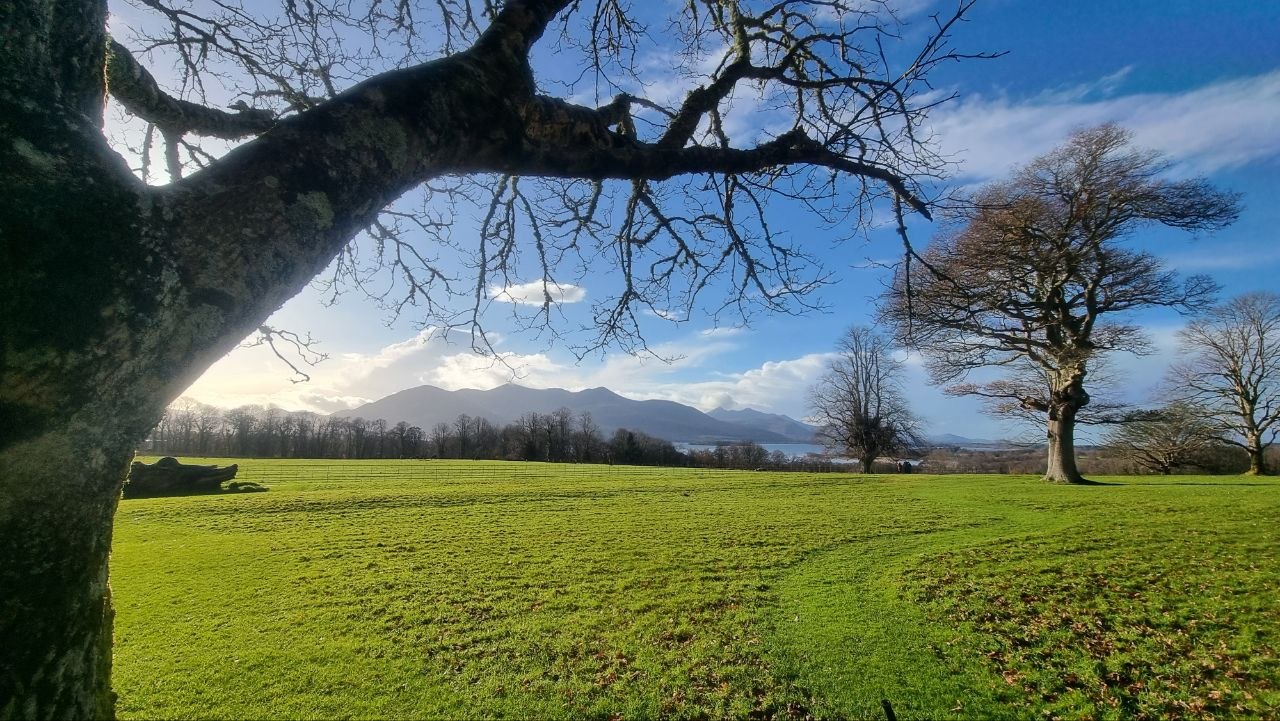
The boat journey
The traditional way to experience all three lakes is by boat — departing from Ross Castle and travelling south through Lough Leane, through the Meeting of the Waters and across Muckross Lake, finishing at the Upper Lake near Lord Brandon's Cottage. Combined with a trip through the Gap of Dunloe on the return, this is the classic full-day Killarney experience that has been run by local boatmen for over two centuries.
Practical information
Boat Tours
Depart from Ross Castle — traditional wooden boats with guides. Seasonal, typically April to October
Ross Castle
Main access point for the lakes — 3km from Killarney town, car park on site
By Foot
The lakeside paths through the National Park are free and open year round — signposted from Muckross House and Ross Castle
By Bike
Cycling along the lake shores through the park is one of the best ways to experience the lakes at your own pace